Living with Postural Orthostatic Tachycardia Syndrome (POTS) can feel as though your body has its own timetable. One day, you might manage a walk by the sea, while the next, simply standing to make a cup of tea feels overwhelming. For neurodivergent people with ADHD or autism, this unpredictability can be even more challenging, as sensory overload, fatigue and nervous system dysregulation often overlap.
Through my work in nature-based, neuro-affirming coaching with neurodivergent adults in Southend-on-Sea, I have found that one of the most powerful shifts comes from moving away from fighting the body and towards listening to it. Rather than asking, "How can I push through today?", we can begin asking, "What rhythm is my body asking for?"
Understanding the nervous system
POTS affects the autonomic nervous system, which regulates functions we do not consciously control, including heart rate, blood pressure, breathing and digestion. Standing upright, heat, dehydration, stress, or overexertion can all trigger symptoms such as dizziness, a rapid heart rate, fatigue, and brain fog.
When we begin recognising the body's early signals rather than waiting until symptoms become overwhelming, we create opportunities to respond with compassion instead of crisis.
Simple practices such as standing slowly, pausing before walking, drinking fluids little and often, and allowing regular moments of rest can make a meaningful difference. These are not signs of weakness. They are ways of working with your nervous system rather than against it.
Living by rhythm rather than pressure
Modern life encourages us to maintain the same pace every day, but nature tells a different story.
The tides ebb and flow. Trees have seasons of growth and seasons of rest. Even daylight changes throughout the year. Our bodies are no different.
Living well with POTS often means replacing rigid expectations with a gentle rhythm. Some days your body will have more capacity than others. Learning to notice these natural fluctuations allows you to pace yourself before symptoms become overwhelming, rather than having to recover afterwards.
Rest is not something to earn. It is an essential part of creating steadiness.

Grounding through nature
Grounding can be both literal and emotional.
Feeling your feet on the earth, listening to waves or birdsong, sitting beneath a tree or noticing the movement of leaves in the wind all provide predictable sensory input that can help settle an overwhelmed nervous system.
If travelling outdoors feels too much on difficult days, simply opening a window, tending a houseplant, or listening to a nature meditation, such as my Beach Reset, can provide a similar calming rhythm.
Nature reminds us that slowing down is not failure. It is simply another pace of living.
Gentle movement
Exercise with POTS is often about consistency rather than intensity. Many people find that recumbent or low-impact movement is more manageable than upright exercise. Gentle stretching, yoga, swimming or short walks can help improve circulation without placing unnecessary strain on the body.
The goal is not to push through symptoms, but to stop while movement still feels supportive. Over time, this helps build trust between you and your body. Gentle exercise is also great support for mental health, but care must be taken not to overdo it.
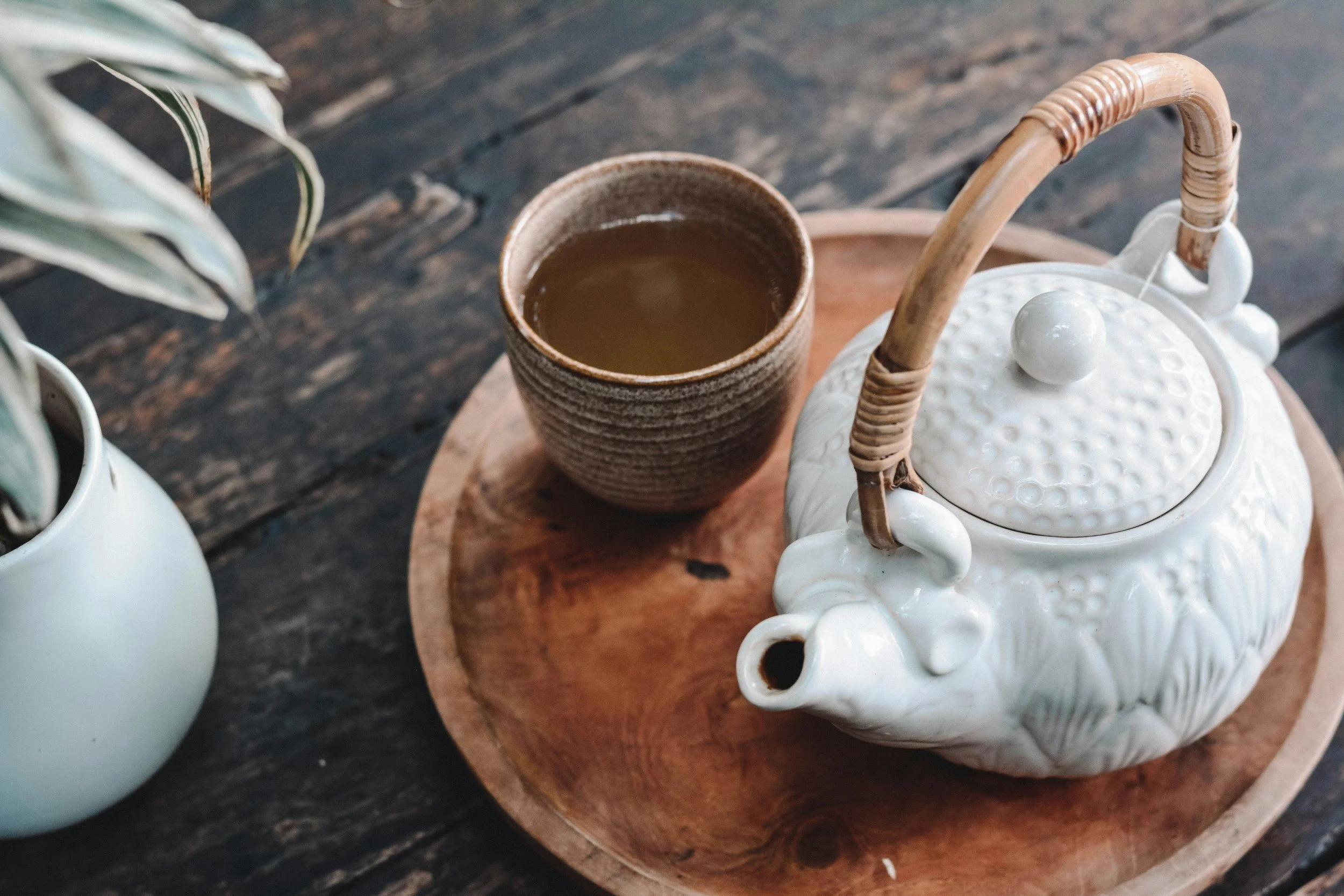
Herbal and nutritional support
Herbs are not a cure for POTS, but they can gently support the nervous system alongside hydration, pacing and medical care.
Ginger is traditionally used to support healthy circulation and may also help ease nausea, which many people with POTS experience.
Rosemary has long been valued for its support of circulation and mental clarity. A warming rosemary infusion, or simply inhaling the plant's aroma, can become part of a grounding daily ritual.
Lemon balm offers gentle support for an overstimulated nervous system. When stress amplifies symptoms, creating moments of calm can reduce the body's overall load.
Oat straw (Avena sativa) is considered a nourishing herb for people experiencing long-term stress or nervous exhaustion. Rather than forcing energy, it supports resilience over time.
Liquorice root is sometimes used by qualified herbalists to support blood pressure and fluid balance. However, it is not suitable for everyone, particularly those with high blood pressure, kidney disease or certain medications, so professional guidance is essential before using it.
Hydration remains one of the foundations of managing POTS. Many people benefit from drinking fluids regularly throughout the day, along with electrolytes, rather than waiting until they feel thirsty. Some also find that eating smaller, more frequent meals helps reduce energy crashes.
Learning to trust your body again
Perhaps the greatest challenge of living with POTS is learning to trust a body that often feels unpredictable. Nature offers a gentle reminder that not everything needs to move at the same speed all the time. Growth happens through cycles. Strength is built through balance. Rest is just as valuable as movement.
The more we listen to our bodies' signals with curiosity rather than judgment, the more confident we become in responding to their changing needs. Living with POTS asks us to redefine success. Sometimes success is walking further than yesterday. Sometimes it is recognising that today is a day for rest. Neither is failure. Like the changing seasons, your body has its own rhythm. The more gently you learn to honour that rhythm, the more space you create for steadiness, resilience and self-trust.
If you would like to explore whether working together is right for you, you can book a discovery session with me. We will talk through what is going on for you, what you are hoping for, and whether my approach feels like a good fit, with no pressure to commit.
Please Note:
This website is provided for informational purposes only and does not constitute providing medical advice or professional services. The content is not intended to be a substitute for professional medical advice, diagnosis or treatment.
Always seek the advice of your physician or other qualified health provider with any questions you may have regarding a medical condition before making changes. Never disregard professional medical advice or delay in seeking it because of something you have read on this website.
